White paper

White paper
A guiding workbook for keeping seats filled: survey your families, report back, and celebrate the change.
Trevor Waddington··11 min read

As the old saying goes, it’s easier – and less expensive – to retain a student than to recruit one. We’d say that’s nearly right. However, schools seemingly spend more money recruiting new ones than consciously satisfying their current community. Of course, your school hosts feel-good events and opportunities for parents to see their children shine, but satisfying a family goes much deeper than that.
What is in this guide below is just one potential piece to a larger retention strategy that your school should have regardless of your annual applicant pool.
In this guide, we’re going to provide you with one strategic, 3-pronged initiative that will provide immediate results for your retention goals. If you need some help along the way, Truth Tree is just a quick phone call or email away. Contact us.
I’m going to drive this home right now: It is critical for your school to survey your constituents annually!
First, let’s start with the goal of your survey. Most people think it’s just to find out what your school is doing well and what areas you can improve. That’s a great start, but you also need to understand what is most important to your constituents. Remember, it’s not about you. It’s about your constituents and what you can do for them.
Ideally, and in the future, you will have an annual survey for all of your constituent groups including alumni, alumni parents, former prospective parents, and former students (those who attended, but are not graduates).
For this guiding workbook, we are going to focus on current parents and current students. The latter is controversial, and we agree depending on the age. However, as more students are driving their futures, it is imperative to get their meaningful feedback. We feel that by 6th grade, they are mature enough to take a version of the parent survey.
The content of the survey is a guiding workbook in and of itself, but you can find examples of general and specific questions online. If you would like a guide in constructing your survey, contact Truth Tree and we’ll be glad to help you create an amazingly actionable constituent survey.
But before we move away from the details of the survey, a few tips. The survey should include:
The results should provide:
As mentioned above, it’s important to have qualifying questions so you can best analyze the results of your survey, but not so many that constituents are less likely to take it in fear of being identified. For this, we suggest using your best judgment.
Truth Tree has a highly strategic template that can be custom tailored to your school’s specific needs. Our template’s results are meant to drive action and provide peace of mind and confidence in the future ahead.
Other important aspects of the survey:
Once you are satisfied with your survey(s), it’s important to let the community know that they will be receiving it. Here’s where your message can make or break the number of responses you get:

It’s not uncommon for the law of diminishing returns to affect the percentage of constituents from completing a survey. That’s where incentives come in. In most cases, you’ll need to be savvy enough to set up an anonymous survey that allows respondents to separately enter their name only after they’ve completed the survey. We would be very careful not to link the name to the survey. You rarely get accurate results when the respondent knows you will see it unless a 3rd party is completely in control of the process. Even though it may cost you money to get them to do it, it is worth it to a point.
#1. How likely would you be to use before care starting as early as 6:45 AM next school year?
a. Absolutely
b. Yes
c. Probably
d. Maybe
e. Probably Not
f. No
g. Absolutely Not
As the survey results come in, here are a few tips:
Well, you did it. You sent out a meaningful survey to drive improvements for the community. But what do you do with all the data?
This is the most tedious part of the process. While online platforms can give you some AI analysis, it’s essential to go through and unpack each statement and question by gender, grade level, race, ethnicity, and years at your school.
This is where Truth Tree truly geeks out – creating easy to consume tables to demonstrate the data for you and telling you what you should be doing. It’s not based on opinion. It’s based on data, and with a large enough respondent pool, data never lies.
Once you a complete report and have discussed the results with your leadership group, it’s time to create concrete, actionable goals and deliverables…
Oh, wait, not so fast. Now you can read the qualitative comments and answers. Buckle up because it could be hard to swallow. You might feel defensive, but it’s essential to gain a deeper understanding.
For example, if parents and students have rated your math program poorly, the comments and answers may point to their distrust in a particular teacher (elephant in the room alert!!).
Or it could be that the math curriculum is too slow for your top learners. This information is how you create the meat of your recommendations to the leadership team in creating your actionable goals and deliverables. This is also why it’s important to keep the survey short. You want the detailed answers. If your survey is too long, your respondents will get survey fatigue and either quit the survey altogether or give brief responses. When this happens, we suggest sending a second concise survey with as little as one question for greatest clarity.
Okay, now you can create your report!
Once you have reviewed everything, create 1-4 concrete, actionable goals and specific deliverables.
Examples:
If you need a critical mass to ensure an initiative is financially and organizationally feasible, you will want to send out that one question survey.
Regarding example recommendations two and three above, you need to be clear that you are not 100% introducing a Chinese language program or absolutely adjusting the field trip and annual trip schedules. You are simply saying that discussions and meetings will take place, but they MUST take place and seriously considered. If you are paying your constituents lip service, they will eventually see it and the value of this process is nullified.
Finally, make sure you have a timeline. Don’t just say you are looking into something. So, before you push out the information to the community, please give them a deadline or timetable. It will be beneficial as we move into prong #3.
“Truth Tree knows the independent school world, and they understand the importance of putting forth a compelling story that is able to share a school’s authentic strengths.”
Margaret Rosser
Director of Communications,
Sandy Spring Friends School
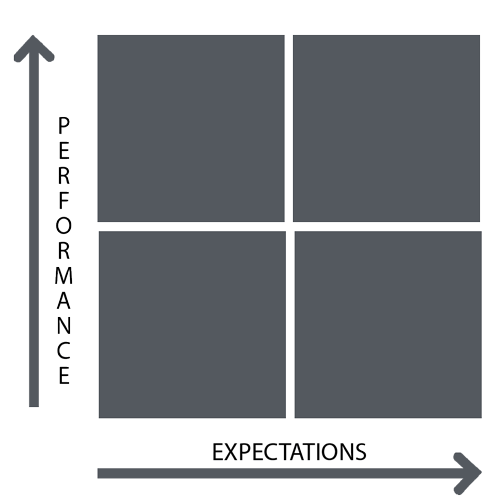
The Truth Tree survey structure will allow you to create a critical quadrant gap chart to analyze how you stack up compared to the constituent expectations.
Here’s an example of how a quadrant gap chart can drive critical decision-making: A school we worked with put a lot of money into advanced technology, including a laptop for every student, multiple 3D printers, GoPros, and the whole nine yards. When we started reviewing the survey results, we saw that parents were delighted with the school’s performance surrounding technology, but they just didn’t care that much.
It was the most significant gap in all of the results. What came of it was a drastic reduction in the annual tech spend, and you know what? It did not impact enrollment at all, and the school was able to reallocate that money for some much-needed improvements in other areas.
The event is your opportunity to showcase what has been accomplished since last winter/spring when you provided the community with the report of improvements based on the survey results. This should be more than a written update. It should be a celebration! Of course, you’ve already planned the event months in advance. The “attractions” of the event are up to you, but it should involve the whole community – parents, students, faculty, and staff. You may also want to invite alumni, community leaders, and prospective families.
Ideally, the event should take place in early fall BEFORE admission open house season begins. If you can get a significant number of “on the fence” families who may be planning to tour other schools to attend, and show them the improvements, they may be less inclined to look elsewhere. Why? Because you’ve demonstrated a great deal of value by accomplishing the goal(s) of the improvement plan. And it’s very likely the constituent angst was the reason the on the fencers were looking elsewhere anyway.
The event should include:
Everything about the event should demonstrate how valuable YOUR connection is to your constituents. Not the other way around. During the event, record it or create a live feed for those who couldn’t attend in person. Make sure everyone who wants to be a part of it live or in replay mode has the opportunity. Then when it’s all done, pat yourself on the back. Breath. And get ready to do it all again in a few short months. From start to finish you made a value proposition to your constituents: We value you so much and are committed to creating the environment that is worthy of your family.
These have been successful for me and some of our clients:
Preschool and Lower School
Community Pep Rally/Speaker Series
The event starts with dinner (catered or potluck). The students go with teachers and aids to do fun projects or watch a live show (Mad Science). At the same time, the parents listen and watch a speaker talk about something that will hopefully promote the school’s mission. After the speaker’s speech, the parents learn about what traction has been made based on the survey results.
Middle and High School
Homecoming Gala
A bit more high-end, this event would include the added layer of alumni and their families. We envision a catered, sit-down dinner and presentation. What better way to generate excitement for the school’s future than to have generations of community members in one place to learn about the state of the school the day before you hopefully beat your rival in sport.
Let’s talk about how your marketing can deliver the concierge experience today’s families expect.
| Cookie | Duration | Description |
|---|---|---|
| cookielawinfo-checkbox-analytics | 11 months | This cookie is set by GDPR Cookie Consent plugin. The cookie is used to store the user consent for the cookies in the category "Analytics". |
| cookielawinfo-checkbox-functional | 11 months | The cookie is set by GDPR cookie consent to record the user consent for the cookies in the category "Functional". |
| cookielawinfo-checkbox-necessary | 11 months | This cookie is set by GDPR Cookie Consent plugin. The cookies is used to store the user consent for the cookies in the category "Necessary". |
| cookielawinfo-checkbox-others | 11 months | This cookie is set by GDPR Cookie Consent plugin. The cookie is used to store the user consent for the cookies in the category "Other. |
| cookielawinfo-checkbox-performance | 11 months | This cookie is set by GDPR Cookie Consent plugin. The cookie is used to store the user consent for the cookies in the category "Performance". |
| viewed_cookie_policy | 11 months | The cookie is set by the GDPR Cookie Consent plugin and is used to store whether or not user has consented to the use of cookies. It does not store any personal data. |