

Whether it’s a primary school paving the way to a prestigious high school or a community college funneling students into a renowned university, feeder schools play a vital role in shaping educational trajectories. Behind the scenes, “feeder school marketing” involves establishing a seamless connection between two educational institutions, fostering a sense of trust and reliability in the academic journey that students and parents embark upon.
The “feeder” institution builds a strong track record for placing its graduates in strong programs, while the “receiving” institution benefits from a stream of well-prepared, motivated students who are more likely to succeed in their programs. At its core, feeder school marketing is about fostering relationships that benefit both pieces of the education journey.
For enrollment and admissions teams, this approach is a win-win!
So how do you move from intention to action? Start here:
- Identify Top Feeder Schools: A Strategic Imperative
The first step in any effective feeder school marketing strategy is to identify your most significant entry points and feeder schools. This is an important step, so don’t skip it!
You might have a “sixth sense” about entry points and schools, but take some time to review the data and get crystal clear about which schools consistently send students that align well with your institution’s values and programs.
Encourage your team to pull a list of enrolled students from the last 3–5 years, then create a simple spreadsheet or report sorted by sending school. For each school, you might include:
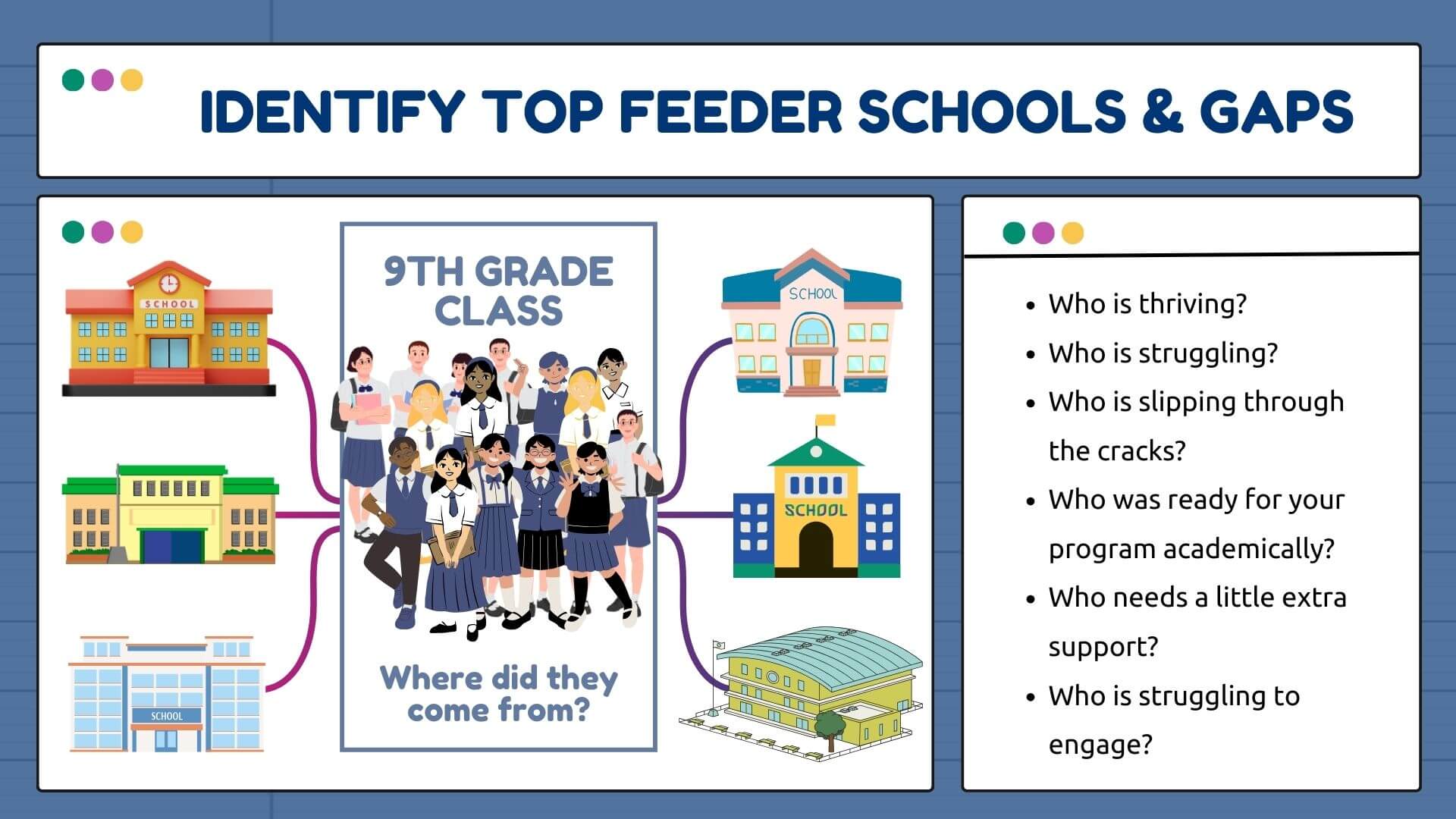
Key Data Points to Review by Sending School:
- Number of applicants from each school – How many families from each school applied? This helps reveal awareness or interest levels.
- Number of Enrolled Students from each school – Where are your enrollees coming from?
- Yield Rate (accepted → enrolled) – High yield often signals strong alignment and/or trust in your school.
- Retention Rate of those students after 1+ years – Are students from certain schools more likely to stick around? This can show match strength.
- Academic Performance or Teacher Feedback – Do students from specific schools come in prepared, engaged, and successful? Or do they tend to struggle?
- Extracurricular Involvement or Leadership – Which feeder schools tend to produce students who lead or participate widely?
- Referral Patterns – Are families from a particular school referring others to you? Word-of-mouth is a valuable signal.
- Parent Satisfaction – Review parent feedback to assess how well the transition and experience are unfolding.
Now, on the flipside, your school might be the feeder school into the next stage of a student’s learning journey. Building and fostering relationships with receiving schools is just as vital, as it conveys the value that graduating from your program sets students up for long-term success.
As the feeder school looking to establish relationships, the data is a bit harder to come by since it’s mostly self-reported. Just as high schools showcase college placement, a K–8 or K–5 school should understand where its graduates thrive, and use that insight to guide future partnerships.
Key Data Points to Monitor as a Feeder School:
- Graduate Destinations – Where did your graduates enroll after leaving your school?
- Application & Acceptance Trends – Where did students apply, and where were they admitted?
- Yield by School – Of those admitted, which schools did students/families choose most often?
- Alumni Success Stories – Which schools report that your alumni are thriving: academically, socially, or in leadership roles?
- Parent & Student Feedback – What do families say about their experience transitioning from your school? Any recurring praise—or pain points?
- Match Strength – Where do you see great fits in terms of culture, values, and academic philosophy? Where might there be a mismatch?
Digging into these data points will help identify the relationships worth strengthening or those that need further evaluation.
- Address Feeder School Mismatches: A Call for Collaboration
It’s also necessary to look at feeder schools where there is a difference between the students they are sending to your school and the students who thrive in your program. While it’s beneficial to forge relationships with diverse feeder schools, if you consistently find yourself waitlisting or declining admission, it’s time to initiate a conversation. This not only supports the feeder school with their outplacement program but also helps them better understand the types of students who excel at your school.
As birth rates drop and so many school options enter the scene, the impact of feeder school marketing is growing. Whether you’re a receiving school looking to sharpen your pipeline or a sending school eager to build partnerships, intentional feeder school marketing strengthens outcomes for students and schools alike.
Even as a small admissions or marketing team, starting with just one or two target schools can make a difference.
In our next blog post, we’ll share practical ways to communicate your value to feeder schools.
Enrollment Doesn’t Start at the Inquiry Form
It starts with trust, alignment, and relationships.
Frequently Asked Questions about Feeder School Marketing Strategy for Private and Independent Schools
What is feeder school marketing?
Feeder school marketing is a strategic approach to building relationships between a “sending” school and a “receiving” school to support student transitions. It involves analyzing enrollment data, strengthening partnerships, and intentionally nurturing trust so students are well-matched and well-prepared for their next academic step.
Why is feeder school marketing important for independent schools?
Feeder school marketing helps independent schools build a stronger admissions pipeline, improve yield, and increase retention. When relationships are intentional, both schools benefit from better alignment, smoother transitions, and students who are more likely to thrive.
How do you identify your top feeder schools?
Start by reviewing enrollment data from the past 3–5 years. Look at applicant volume, enrollment numbers, yield rate, retention, student performance, and referral patterns. The goal is to identify the schools where some of your strongest students, families, and retention.
What data should admissions teams analyze when evaluating feeder schools?
Admissions teams should review:
Number of applicants by sending school
Number of enrolled students
Yield rate (accepted to enrolled)
Retention after one year or more
Academic performance and engagement
Leadership or extracurricular involvement
Parent satisfaction and referral trends
This data reveals alignment strength and long-term fit.
What should a school do if a feeder relationship isn’t producing strong-fit students?
If students from a particular school are frequently declined, waitlisted, or struggling after enrollment, it’s time for a collaborative conversation. Sharing insights about student readiness and fit helps both schools refine expectations and better support families.
How can a K–8 or K–5 school strengthen relationships with receiving schools?
By tracking graduate destinations, acceptance trends, alumni success stories, and family feedback. Proactively sharing this information, along with student strengths and program outcomes, helps build credibility and trust with high schools.
How many feeder schools should a small admissions team focus on?
Start small. Even one or two strategically chosen feeder schools can meaningfully impact enrollment outcomes. Focus on quality of relationship over quantity of partnerships.
How does feeder school marketing support long-term enrollment strategy?
Feeder school marketing shifts admissions from reactive to strategic. Instead of waiting for inquiries, schools intentionally cultivate relationships that lead to consistent, aligned applicants, strengthening both yield and retention over time.

Missy Speyrer came to Truth Tree after 8 years at an independent school in South Louisiana. From branding and marketing to social media and auxiliary programs, she is no stranger to working alongside a lean team to get too much done in too little time.
Now, she curates insightful content to support school marketing and enrollment teams aiming to amplify their digital reach with right-fit families.
Want to see if Truth Tree is the right team for you?