

You’re in the middle of your second open house of the fall. The application deadline is circled on the calendar. Families have walked your halls, met your teachers, and watched their child light up in a classroom.
Now what?
Do they get a generic “Thanks for visiting!” email? A phone call? Are your ads still running?
Here’s what’s about to happen on their end. In a few weeks, they’ll be traveling over the holiday. Or hosting extended family. Then their eyes shift to winter break. They’ll be sitting around tables with grandparents, siblings, and old friends, and at some point someone will ask, “So, which schools have you been looking at for the twins?”
The family is about to go quiet, but they haven’t stopped deciding.
Who Built More Value?
Picture two schools. Both gave a great tour.
Between now and the application deadline, School A sends one email: “Thanks for visiting!”
School B calls within two days and mentions the robotics lab their daughter couldn’t stop talking about. Before Thanksgiving, it sends a two-minute video of students in that lab. Over the break, a few short, genuinely useful emails arrive: how tuition assistance actually works, what the application asks for, what a day looks like for a sixth grader. In January, the daughter is invited back to shadow for a morning.
Both schools are good schools. Only one is still part of the conversation in January.
Why Staying Present Matters: How Families Actually Decide
Families don’t make school decisions in a straight line. They tour, they drift, they talk, they come back, they compare in an AI chat, they ask in a Facebook parent group, and come across a Reddit thread. A few well-studied patterns explain why the weeks after a visit matter so much:
- Familiarity builds preference. People tend to favor what they’ve encountered more often. As Trevor Waddington points out in chapter 2 of Wired to Enroll, psychologists call this the mere exposure effect. It’s one of the most consistently replicated findings in the field. Four thoughtful touches beat one polite, yet automated one.
- Memories fade without reinforcement. A family touring three or four schools this fall will have them blurring together by January unless something brings yours back into focus.
- The ending shapes the memory. People judge an experience largely by its high point and how it ended. Your tour doesn’t end when the family pulls out of the parking lot. It ends with what you do next.
- People pass along stories, not features. When a parent describes your school over a holiday dinner, they’ll reach for whatever is most vivid and specific. “They have a great STEM program” fades. “My daughter built a robot that sorts recycling when she was there” gets repeated.
That last point matters more than it looks. Those holiday conversations are the “word of mouth” your inquiry form will record in a few months. You can’t control what gets said at someone else’s table. You can make sure the family has something good to say.
5 Ways to Stay Top-of-Mind with Prospective Families Through Winter Break
1. This Week: Pick Up the Phone
For families who were genuinely engaged on campus, a call beats any email. It doesn’t need to come from the admissions director. A teacher they met or a student ambassador’s family can be just as powerful.
If you can, keep it short and specific. Name something their child connected with while on campus. Ask what questions came up on the drive home. This becomes the end of their visit, and you get to write it.
Make it easier: Ask tour guides to jot down one detail about each family before they leave. “Asked a lot about the theater program” is all your team needs to make the follow-up personal.
2. Before Thanksgiving: Give Them a Story Worth Retelling
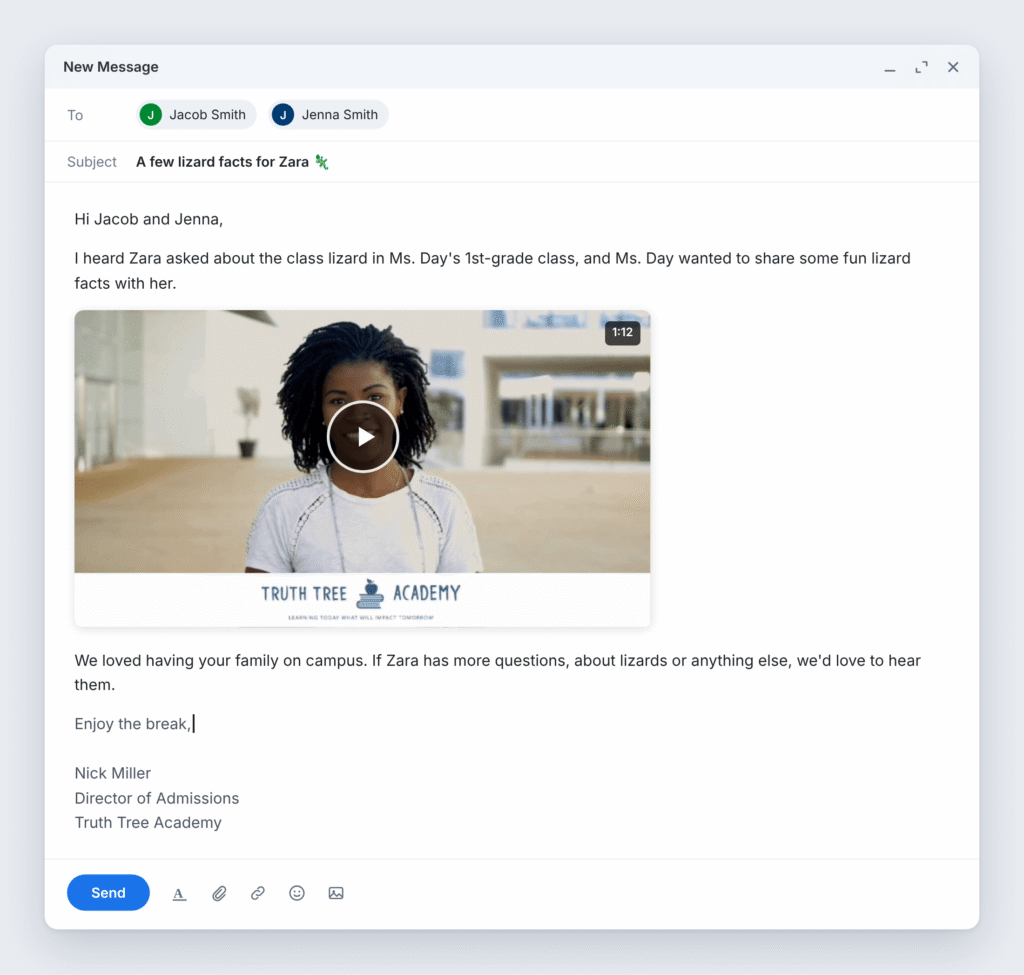
Send each family one vivid, specific story that matches what they care about. A short video of a student in the program they asked about. A teacher explaining a project. An alumnus describing what they carried into college.
You might even have these stories ready to send. They’re likely sitting in your news section, your newsletter, your social media archive, or your school magazine, written for current families. Give them a reason to shine again by sending them to prospective families.
The goal is simple: when someone at the table asks about your school, there’s a story and a memory ready to be told.
3. Keep Your Ads Running Through the Breaks
December is when many schools pause their advertising. It’s also when families finally have the time to sit down, scroll through social media, open their laptops, and think it through.
Keep your remarketing campaigns live for families who visited your website, attended an open house, or started an inquiry. That way, when a parent scrolls during a morning cup of coffee or a quiet afternoon, your school is still part of the picture.
4. Over the Breaks: A Few Helpful Emails, Not a Newsletter Dump
Resist the urge to forward your 15-link community newsletter. Instead, plan three or four short emails, spaced out across the break, that each do one helpful thing:
- How tuition assistance actually works, in plain language
- A simple application checklist with dates
- A day in the life of a student in their child’s grade
- Answers to the questions families ask most often on tours
Helpful content builds trust in a way promotional content can’t. When you make a family’s decision easier, you become the school that helped.
Trevor touches on this in his book, too. Chapter 5 is all about winning the consideration stage by removing friction and reducing fear, not by piling on more.
5. In January: Ask for a Small Yes
Before the application deadline arrives, invite the family back for something small: a shadow morning, a class visit, a student performance. Design it for the child, not just the parents.
Small commitments make bigger ones feel natural. A child who has already spent a morning in your classrooms isn’t imagining your school anymore. They’re remembering it. And in many families, the child is the tiebreaker.
Pair the invitation with a deadline reminder that addresses a real hesitation, such as financial aid timelines or what happens after they apply, rather than a countdown clock.
What This Looks Like on a Calendar
- Within 48 hours of the visit: Personal call or note that names something specific
- Before Thanksgiving: One story matched to the family’s interests
- Late November through December: Remarketing campaigns stay live; two or three helpful emails
- Early January: Invitation back for a small, child-centered visit (especially if the child hasn’t been on campus yet)
- Two weeks before the deadline: A reminder that answers a real question
The Family Is Still Deciding, Even When They Go Quiet
Staying present through the holidays isn’t about being pushy. It’s about being helpful while families do the hardest part of the process: talking it through, weighing options, and imagining their child somewhere new.
The schools that build value and earn trust during the quiet weeks are the ones still being talked about in January.
Who’s staying in touch with your families over break?
Families finally have time to think it through over winter break.
Make sure they see you.

Missy Speyrer came to Truth Tree after 8 years at an independent school in South Louisiana. From branding and marketing to social media and auxiliary programs, she is no stranger to working alongside a lean team to get too much done in too little time.
Now, she curates insightful content to support school marketing and enrollment teams aiming to amplify their digital reach with right-fit families.
Frequently Asked Questions About Staying Top-of-Mind During School Breaks
How soon should schools follow up after a tour or open house?
Following up within 48 hours is a great goal. The visit is fresh, and a personal follow-up that references something specific about the family’s experience extends the moment they’re most likely to remember.
Should schools pause advertising over winter break?
Generally, no. Winter break is often when families have time to research and reflect. Remarketing to families who already visited or inquired keeps your school visible while they’re actively thinking it through.
What should schools send prospective families between the open house and the application deadline?
Short, specific, helpful content: student stories matched to the family’s interests, plain-language explanations of tuition assistance, application checklists, and invitations to return for a small visit. Most schools already have this content in their news section, newsletter, or magazine.
How many times should a school contact a family after a visit?
There’s no magic number, but one “thanks for visiting” email isn’t enough. Four to six thoughtful, well-spaced touches between the visit and the deadline, across phone, email, and ads, can keep your school relevant and top-of-mind without overwhelming the family.
Why do families say “word of mouth” on the inquiry form?
Because the conversations they remember most are the human ones, often the ones that happened around a holiday table. The touchpoints that shaped those conversations, like ads, emails, and stories, usually happened weeks earlier and get forgotten.